General

Brief history

silba history1The Croats had established a settlement on Silba most probably in the 8th century already. They were in the first place cattle-breeders, having the obligation to give one-fourth of their cattle-breeding and agricultural products to the Zadar noblemen, whose colonists they were. The sterility of soil and the new abience had prompted the colonists to engage in fishing. Thus, in 1501, they appeared as fishermen of pelagic species in the coves of the Molat and Dugi Otok islands.


From the middle of the 16th century there began their shiping orientation. The following were the factors that excersised their influence in that field: shipping exeriences gained through fishing activities, the position of the island along the ancient sailing route Zadar - Venice and the possession of suitable coves for the accommodation of smaller craft.

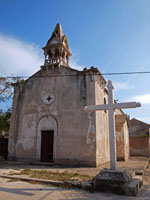
silba history2The first known owner and leader of ships of short and long coasting was Juraj Vinturic, and the first captain Grgur Matkovic, while eight men appear as sailors. The shipping and navigation orientation was the result of own strength and abilities. The 18th century constitutes a period of strengthening of Silba's shipping. In the first decades of that century the most prominent shipping owner was Antun Vinturic. He had raised a votive foundation - St. Marko's Church.

In the middle of the same century the brothers Toma, Simun and Matij Pavlina were also prominent shipowners. The latter two are responsible for establishing the Franciscan Monastery with a Church of St. Mary of Karmel. In the course of 17th century there were, besides sailors, 40 shipowners and captains.
The 18th century in the period of rise of Silba's shipping affairs. The predominating affairs of this period was the transport of small and big cattle from Zadar to Venice. The transport ships for cattle were called "manzere" (ital. manzo - ox) and "kastere" (ital. castrato - ram). The transport capacity of "manzere" was from 60 to 100 oxen, and of "kastere" 300 to 400 rams. The "manzere" were of the following types: fregadones, marzilianes, trabacules and peliges, and the "kastere": trabacules and large braceres.
The transport of cattle was profit-bringing. The gross profit per every transported ox was 9-18 lire.
During the last decades of the 18th century the transport of cattle to Venice was extended to Split, Trogir, Sibenik, Rijeka and especially Trieste.

At the end of the 18th century the Silba people widened their carrying activity and extended it to the Mediterranean and the oceans. Then there appeared 16 more powerful shipowners (owners or co-owners of long distance sailing vessels).

silba history3In the course of the 18th century (until 1806) Silba had over 200 influential shipowners and captains with over 150 sailing vessels for short and long coasting, with a total of about 20,000 tons of carrying capacity. In the mentioned time period the island of Silba ranked first in the shipping affairs in the Zadar area, and it occupied a prominent position on our coast generally. The prosperity of Silba in the 18th century was the result not only of a well-developed shipping but also of other, although secondary, economic branches. These branches of economy were in the first place cattle-breeding and wine-growing. This prosperity led to an intensive building acitivity (of dwelling and sacral structures).

Already at the end of the 17th century foreigh writers of travel stories maintained that Silba was a big village or a small but highly civilized town. In the 18th century Silba was called "Small Venice".
Favourable material circumstances led to a cultural prosperity. Thus, from the middle of the 18th century, the majority of men were literate. Already, from the second half of the 16th century there existed in Silba a kind of sacral and profane school (the first and oldest in the Zadar islands).
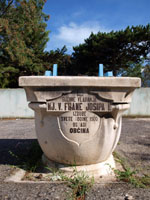

Even during life the sailors raised sacral objects and willed amounts of money for charity purposes.
They also decorated their churches and homes with valuable pictures. Preserved are three altar picures by the Venetian painter Carlo Ridolfi, and four pictures on wooden altars by Tizian's successors.
The occupation of Dalmatia in 1806 by Napoleon, the continental blockade and the piratical war in the Adriatic reduced Silba's shipping to nothingness.


silba history4The revival of the town took place after Napoleon's defeat. The work was difficult, and the islanders had to resort to their own powers. A classical example is Simun Zamarija Supicic. As a poor boy he left for the sea. By his talent and persistance he achieved the position of the captain. After a certain time he withdrew to Odessa, but he remained in firm connection with the maritime trade, being engaged in mediatory affairs. He grew extremely rich. Having made a name for himself by his efforts in controlling the plague, he received a golden medal from the Emperor Nikola I. Later he became a consul of the Papal State in Russia and also a consul of two smaller States. In 1836 he was awarded by the Pope Pio IX the knight Order of St. Grgur the Great.


In the period of revival of its shipping affairs (between 1815 an 1890). Silba possessed 40 captains of long distance coasting as well as 14 commercial lieutenants. In the same period Silba boasted of 12 more prosperous shipowners and 42 shipping managers, with about 4000 tons of carrying capacity, having thus risen to the first place in the region of the towns of Zadar and Sibenik.

silba history5The advent and competition of ships of the Austrian Lloyd and steamers of other companies defeated altogether Silba's shipping. The Silba sailors went over to steamships in masses, either as common sailors or officers and many of them emigrated to South and North America. Several of them accepted the office of harbour pilot or lighthouse tender. From the beginning of embarking on stemships to the present day there have navigated in the capacity of captains long, great and small coasting a total of 54 captains. A considerable number of young captain candidates among them is an evidence of the indistinguishable maritime consciousness of the island of Silba. From the very beginning of fishery there were built fishing smacks and small transport craft. There are indicators that already in the second half of the 18th century there were held in Silba private nautical courses, and in this time there appeared cadets in Silba (finished pupils of the marine school in Venice). In teh first phase of revival of shipping the private courses in nautical art and skill were conducted by the following captains: Jakov Ferara, Bartul Supicic, and Frano Lovrovic.


In 1883 a public marine course was established. Until 1905 this course was conducted by the teacher and sailor Antun Nakic. The activity of the course was discontinued in 1907.
The task of helping elderly and sick sailors was taken over by the "Institution of Public Charity". The funds of this institution was in the main complemented through contributions from the Silba men themselves. In 1887 there was established in Trieste the "Foundation Marko Diminik Garofolo", with a capital of 12000 florins for assisting poor members of the Garofolo family.


silba history6Fisheries were from the very beginning a secondary economic branch, which was in the main limited to covering domestic requirements. In 1907 a fish cannery was established by Ivan Degrassi from Izola. This cannery ceased work in 1914. In 1927 a Fishery Co-operative was established. During the first 10 years it was very active. From the year 1647 to the present day 100 persons have lost their lives at sea. Besides the already mentioned Simun Supicic, the following were also either commended or awarded medals for their marine excellency: Jerko Dunatov, Antun Rasol, Dionizij Brnetic, Nino Matesic, Antu Bonicioli and Kazimir Postic. The people od Silba had built up in the course of the 16th, 17th and 18th centuries a system of castels, guard-houses and other fortifications for the defence of the settlement against pirates.